INTASFFR: Unveiling the Framework for Integrated Sustainable Farming Systems and Future Resilience

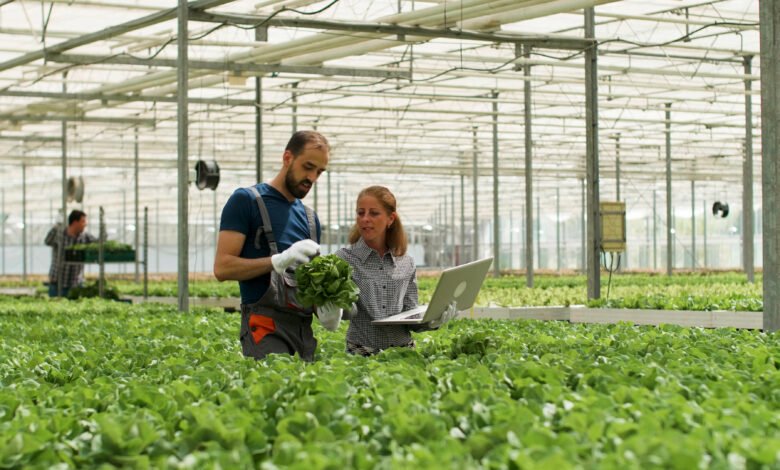
In an era of climate volatility and resource scarcity, the agricultural sector faces unprecedented challenges. INTASFFR (Integrated Sustainable Farming Systems for Future Resilience) emerges as a transformative paradigm, harmonizing ecological balance, economic viability, and social equity. This holistic approach transcends conventional farming by weaving together biodiversity, renewable resources, and community engagement into a self-sustaining tapestry. By reimagining agriculture as a synergistic ecosystem rather than an extractive industry, INTASFFR offers a blueprint for food security in the 21st century. This article explores its core pillars, demonstrating how interconnected strategies can regenerate landscapes while nourishing communities.
1. Ecological Synergy: The Heart of INTASFFR
INTASFFR prioritizes the restoration of natural ecosystems through polycultures, agroforestry, and soil regeneration. Unlike monocultures that deplete nutrients and increase pest vulnerability, this pillar integrates complementary species—such as nitrogen-fixing legumes alongside grains—to mimic natural biodiversity. Soil health is revitalized using composted organic matter, biochar, and mycorrhizal fungi, sequestering carbon and enhancing water retention. Simultaneously, habitat corridors for pollinators and beneficial insects reduce dependency on chemical pesticides. This creates a resilient web where each organism supports the whole, transforming farms into carbon sinks that actively combat climate change while yielding nutrient-dense crops.
2. Circular Resource Management: Closing the Loop
Central to INTASFFR is the elimination of waste via closed-loop cycles. Agricultural byproducts—like crop residues or livestock manure—are converted into biogas, compost, or animal feed rather than discarded. Rainwater harvesting and greywater recycling systems minimize irrigation demands, while renewable energy (solar, wind) powers operations. This circularity extends to nutrient recovery, where microbial digesters extract phosphorus and nitrogen from waste for reuse as fertilizers. By transforming linear “take-make-dispose” models into regenerative circuits, farms reduce external inputs, lower costs, and insulate themselves from market volatility in synthetic fertilizers or fossil fuels.
3. Socio-Economic Equity: Empowering Communities
INTASFFR redefines success beyond yield metrics to encompass social well-being. It champions fair labor practices, profit-sharing cooperatives, and direct farm-to-consumer networks that bypass exploitative middlemen. Training programs equip farmers with agroecological skills, while microfinancing supports transitions to sustainable practices—particularly for women and smallholders. Localized food hubs prioritize affordable access to fresh produce in underserved areas, strengthening community health and food sovereignty. This pillar ensures economic resilience isn’t achieved at the expense of human dignity but through inclusive growth that uplifts all stakeholders.
4. Adaptive Innovation: Technology in Service of Sustainability
Leveraging technology judiciously, INTASFFR employs AI-driven soil sensors, drone monitoring, and blockchain traceability to optimize decisions while minimizing environmental footprints. Predictive analytics forecast pest outbreaks or droughts, enabling preemptive interventions like intercropping adjustments. Open-source platforms share low-cost innovations globally—such as solar-powered drip irrigation—democratizing access to tools. Crucially, technology here serves ecological goals: data informs biodiversity enhancements rather than justifying chemical shortcuts, ensuring progress aligns with planetary boundaries.
5. Policy and Scalability: From Farms to Food Systems
Systemic change requires supportive governance. INTASFFR advocates for policies subsidizing cover cropping, agroforestry, and organic certification instead of industrial subsidies. Land-use zoning protects arable land from urbanization, while carbon credits reward sequestration practices. International partnerships share climate-resilient crop varieties and facilitate knowledge exchange. Scalability hinges on “lighthouse farms” demonstrating viability, inspiring regional adoption through tangible results—proving that productivity and sustainability aren’t mutually exclusive but intrinsically linked.
Conclusion
INTASFFR transcends trendiness; it is a survival imperative. By interlinking ecological stewardship, resource circularity, social justice, and smart innovation, this framework offers a path to nourish 10 billion people without exhausting Earth’s systems. The transition demands courage to abandon short-term fixes—but the reward is a legacy of fertile soils, thriving communities, and a stabilized climate. As droughts intensify and biodiversity plummets, INTASFFR isn’t just an option—it’s agriculture’s only viable future.
FAQ Section
Q: Can INTASFFR work in arid regions with poor soil?
A: Absolutely. Techniques like zai pits (water-harvesting trenches), drought-tolerant polycultures (e.g., millet with pigeon peas), and biochar-amended soils rebuild fertility and moisture retention over time, even in degraded landscapes.
Q: Won’t eliminating synthetic fertilizers reduce yields?
A: Initially, yields may dip during the 3–5-year transition as soil microbiology recovers. However, long-term studies show comparable or higher yields due to reduced pest losses, enhanced soil fertility, and climate resilience.
Q: How can urban consumers support INTASFFR principles?
A: Prioritize purchases from agroecological farms via CSAs or farmers’ markets, reduce food waste, compost household scraps, and advocate for municipal policies supporting regenerative agriculture.
Q: Is INTASFFR scalable for industrial-sized operations?
A: Yes. Large farms can adopt phased transitions—starting with cover cropping or rotational grazing—while leveraging technology for efficient resource management. Cooperatives can pool resources for shared infrastructure.
Q: What role do livestock play in this system?
A: Livestock are integrated thoughtfully: rotational grazing enriches soils, while manure feeds compost systems. Animals consume crop residues, reducing waste and eliminating feed monocultures.