
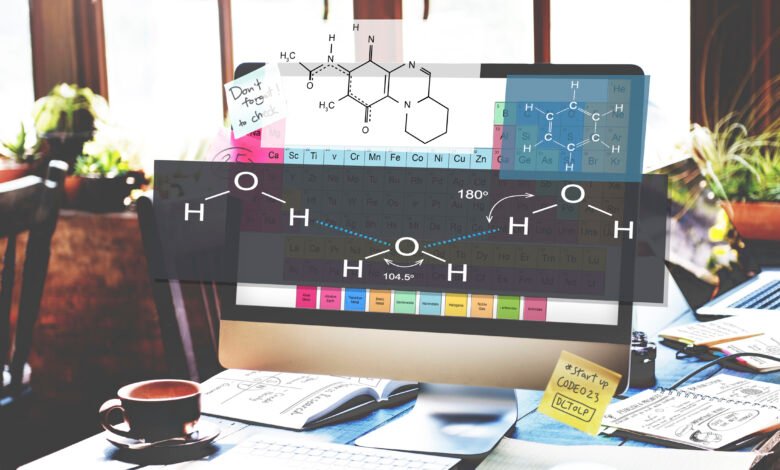
The notation “HCOOCH CH₂ H₂O” hints at key organic chemistry components: an ester fragment (HCOOCH), a methylene group (CH₂), and water (H₂O). While not a standard chemical formula, these symbols represent fundamental building blocks in organic reactions. This article explores their roles in ester hydrolysis, polymerization, and biochemical processes, unraveling the significance of these simple notations in complex chemical systems.
1. Structural Roles of HCOOCH, CH₂, and H₂O
HCOOCH denotes a formate ester group (e.g., methyl formate, HCOOCH₃). This moiety features a carbonyl (C=O) bonded to an alkoxy group (–OCH), making it reactive in hydrolysis and polymerization. CH₂ represents a methylene bridge, a versatile spacer in organic chains (e.g., polymers or biomolecules) that influences molecular flexibility and reactivity. H₂O (water) acts as a solvent, reactant, or catalyst—its polarity and hydrogen-bonding capabilities drive reactions like hydrolysis. Together, these fragments underpin transformations in industrial chemistry and biochemistry, from polyester synthesis to enzymatic processes.
2. Hydrolysis: H₂O-Driven Breakdown of HCOOCH Esters
Hydrolysis is a quintessential reaction where H₂O cleaves ester bonds in HCOOCH. In acidic or basic conditions, water nucleophilically attacks the carbonyl carbon of the ester, yielding a carboxylic acid (e.g., formic acid, HCOOH) and an alcohol (e.g., methanol, CH₃OH). For vinyl esters (like HCOOCH=CH₂), hydrolysis produces unstable enols that tautomerize to aldehydes (e.g., acetaldehyde). This process is vital in biodegradation, pharmaceutical synthesis, and ester-based polymer recycling, where controlling pH and temperature optimizes reaction rates and product yields.
3. CH₂ Groups in Polymerization: Bridging Monomers
In polymerization, CH₂ units serve as critical linkers. For instance, in polyethylene terephthalate (PET), –CH₂– chains connect ester groups, imparting durability and elasticity. Similarly, HCOOCH-derived monomers (e.g., vinyl formate) polymerize via radical initiation, forming poly(vinyl formate). Hydrolysis of this polymer then generates poly(vinyl alcohol)—a water-soluble material used in adhesives and textiles. The methylene group’s length and bonding angle dictate polymer crystallinity, thermal stability, and mechanical properties, enabling tailored material design.
4. Biochemical Relevance: Esters and Water in Metabolism
In living systems, HCOOCH analogs (e.g., acetyl-CoA) participate in metabolic cycles like the citric acid cycle, where ester hydrolysis releases energy. CH₂ units appear in fatty acid chains, influencing membrane fluidity. H₂O facilitates enzymatic hydrolysis, such as lipase-catalyzed triglyceride breakdown. These interactions sustain energy transfer and structural integrity; disruptions can lead to metabolic disorders, highlighting the delicate balance of ester-water chemistry in biology.
5. Industrial Applications and Environmental Impact
Industrially, HCOOCH esters are solvents or intermediates in perfumes and pesticides. Hydrolysis with H₂O detoxifies ester pollutants, though it requires energy-intensive conditions. CH₂-rich polymers (e.g., polyethylene) dominate packaging but persist as microplastics—partial hydrolysis offers a degradation pathway. Sustainable practices now employ catalytic hydrolysis (using enzymes or acids) to recover monomers from waste, reducing reliance on fossil feedstocks and minimizing ecological harm.
Conclusion
The interplay of HCOOCH, CH₂, and H₂O exemplifies core principles of organic reactivity: hydrolysis transforms esters into acids and alcohols, methylene groups architect macromolecules, and water enables life-sustaining chemistry. Understanding these symbols unlocks innovations in green chemistry, materials science, and biotechnology, proving that even fragmented notations encode profound chemical narratives.
FAQ
Q1: What does “HCOOCH” represent?
It typically denotes a formate ester group (e.g., HCOOCH₃ for methyl formate), common in fragrances, solvents, and polymer precursors.
Q2: Why is CH₂ important in organic chemistry?
As a methylene group, CH₂ connects atoms in chains/rings, affecting molecular rigidity, solubility, and reactivity in plastics, fuels, and biomolecules.
Q3: How does H₂O participate in ester hydrolysis?
Water acts as a nucleophile, breaking ester bonds (C–O) via acid/base catalysis to form carboxylic acids and alcohols.
Q4: Can hydrolysis be eco-friendly?
Yes! Enzymatic hydrolysis uses low energy and mild conditions, enabling biodegradable plastic design and ester pollutant remediation.
Q5: Are HCOOCH esters naturally occurring?
Yes—plant essential oils (e.g., ethyl formate in raspberries) and animal pheromones often contain volatile esters.
